Why hazard labels matter
Dangerous goods must be classified, packed, marked, and documented according to international rules before they can move by sea, air, or road. The hazard label is the most visible signal of what is inside a package. Recognizing the symbols helps shippers, warehouse teams, and carriers handle goods safely and prepare the right paperwork.
Class 1 — Explosives
 Explosives (Class 1)
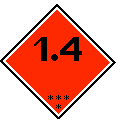 Class 1.4 — no significant hazard
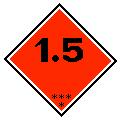 Class 1.5 — very insensitive, mass explosion hazard
Class 2 — Gases
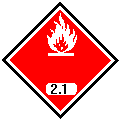 Flammable gas (Class 2.1)
 Non-flammable, non-toxic gas (Class 2.2)
Class 3 — Flammable liquids
 Flammable liquid (Class 3)
Class 4 — Flammable solids
 Flammable solid (Class 4.1)
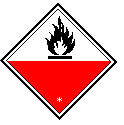 Spontaneously combustible (Class 4.2)
 Dangerous when wet (Class 4.3)
Class 5 — Oxidizing substances and organic peroxides
 Oxidizer / organic peroxide (Class 5.1 / 5.2)
Class 6 — Toxic and infectious substances
 Toxic substances (Class 6.1)
 Infectious substances (Class 6.2)
Class 7 — Radioactive material
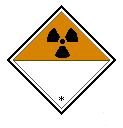 Radioactive material (Class 7)
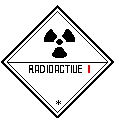 Radioactive — Category I
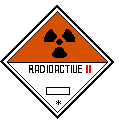 Radioactive — Category II
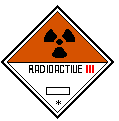 Radioactive — Category III
Class 8 — Corrosive substances
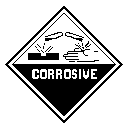 Corrosive substances (Class 8)
Label format
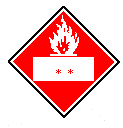 Location of the hazard class number on the label
Important note
This page is a visual reference only. Actual classification, UN number, packing group, packaging, marking, and documentation must follow the current IMDG Code (sea), IATA Dangerous Goods Regulations (air), ADR (road), or the applicable national regulation. Always work with a qualified dangerous goods specialist before shipping hazardous materials.